Navi
From static reports to Ask Navi, a proactive AI coaching agent
The Project
Navi is an AI-powered coaching platform for accounting professionals: a conversation gets recorded, analyzed, and scored against six criteria, then a persistent AI chat agent, Ask Navi, helps the user act on what it found.
The engagement started as a UX audit of an early MVP, and evolved into defining the product’s core interaction model: moving Navi from a static scoring report toward a proactive, conversational agent that guides users to their next action instead of waiting to be asked.
Designing a coaching experience that drives growth
Modern coaching platforms share a common objective: helping users continuously improve through structured goals, actionable feedback, and visible progress.
Through product discovery and competitive analysis, several recurring patterns emerged:
- Goal-oriented experiences
- Transparent and actionable feedback
- Progress tracking and motivation systems
- Personalized coaching journeys
- Humanized AI interactions
These insights became the foundation for Navi’s future product evolution.
Discovery & Product Strategy
The discovery phase explored leading coaching and enablement platforms to understand how they guide users toward measurable improvement.
The analysis focused on coaching workflows, feedback systems, progress visualization, AI interactions, and engagement loops that encourage long-term adoption.
This process helped uncover opportunities to strengthen Navi’s onboarding, scoring model, coaching experience, and overall product narrative.
Making Performance Data More Meaningful
One of the primary opportunities identified was improving how coaching results and performance metrics were presented to users.
The original experience relied heavily on a single score and lengthy AI-generated reports, making it difficult to understand progress or identify specific areas for improvement.
Recommendations included multi-dimensional scoring, visual performance breakdowns, trend tracking, and personalized recommendations that help users focus on the areas that matter most.
Transforming Feedback Into Action
The original experience buried its most valuable asset: every piece of AI feedback was already traceable back to a specific quote in the conversation, but a single long-form report made that evidence hard to find or trust.
The redesign broke feedback into per-criterion components, always showing what went well and what to improve grounded in the original quote, with a direct call to action to keep going: “talk more with Navi about improving clarity in your conversations.”
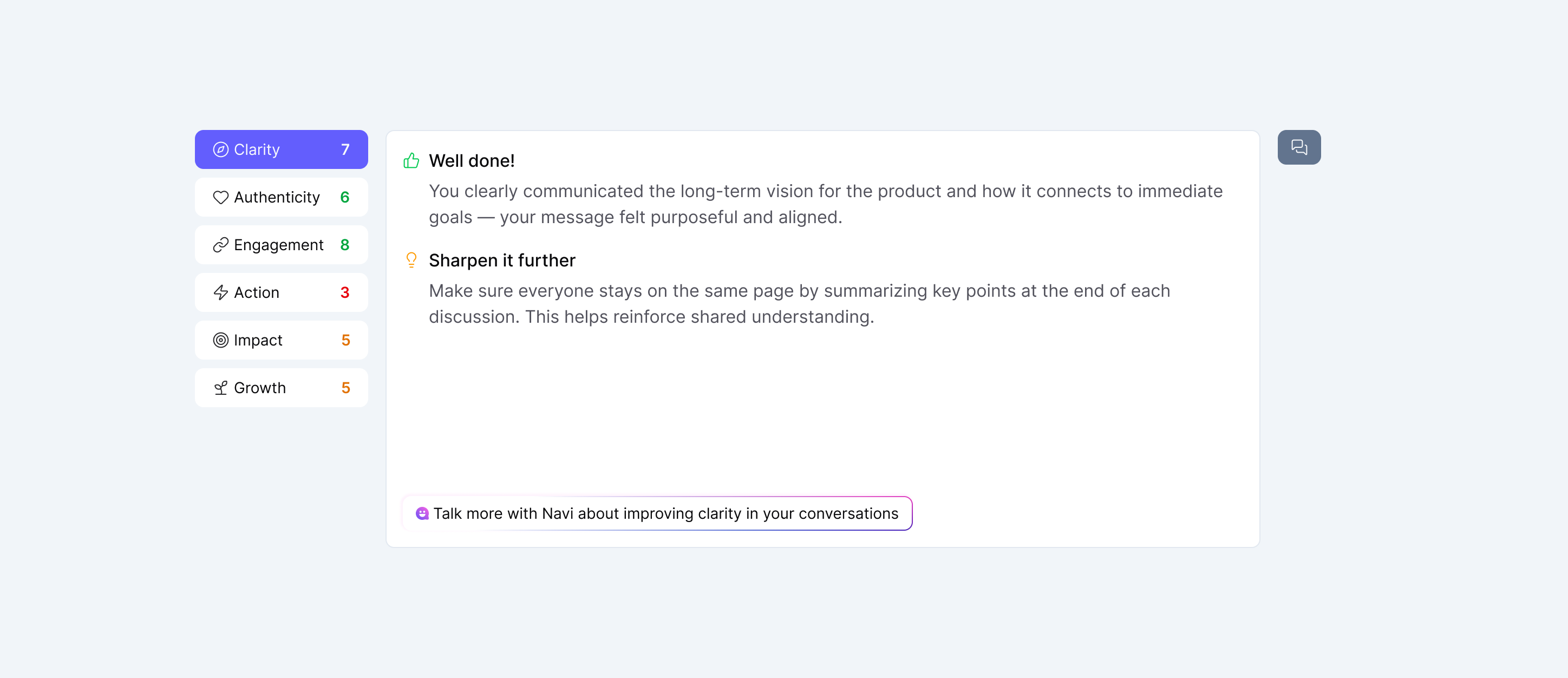
That CTA is the hinge point of the redesign: instead of ending at a report, every insight becomes an entry point into a conversation with the agent, pre-loaded with the exact context that prompted it.
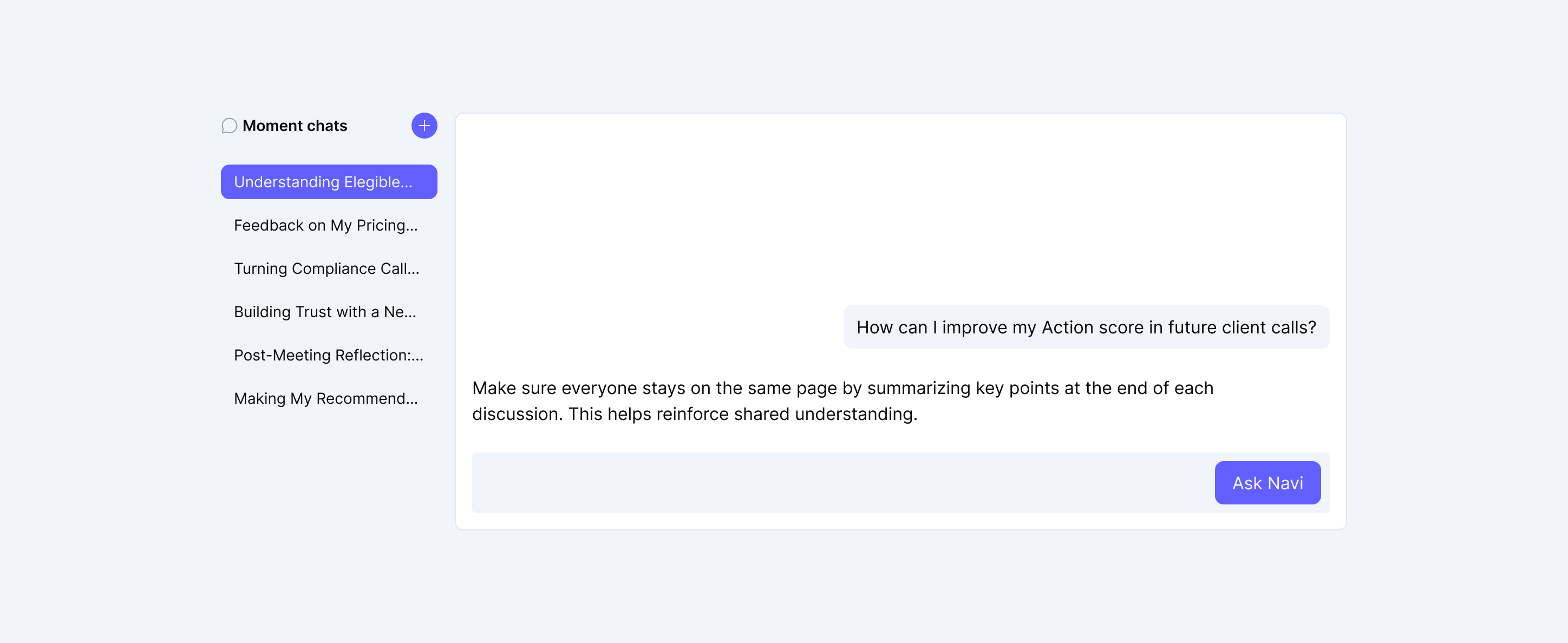
The objective was to shorten the feedback loop and make the agent feel like an active coach, not a static report generator.
Reducing Friction Across Core Workflows
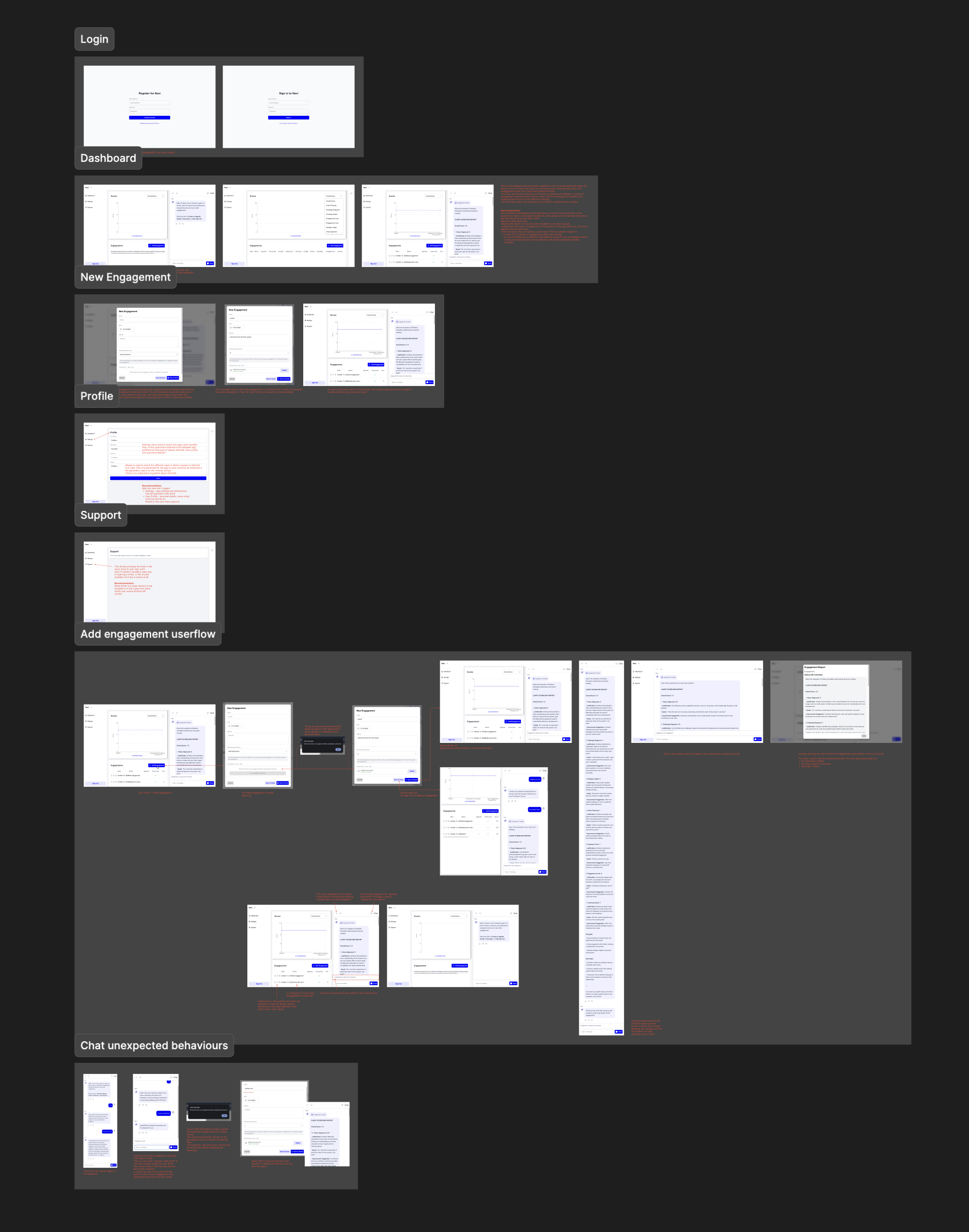
The audit identified several opportunities to simplify engagement creation, reduce unnecessary user decisions, and improve overall usability.
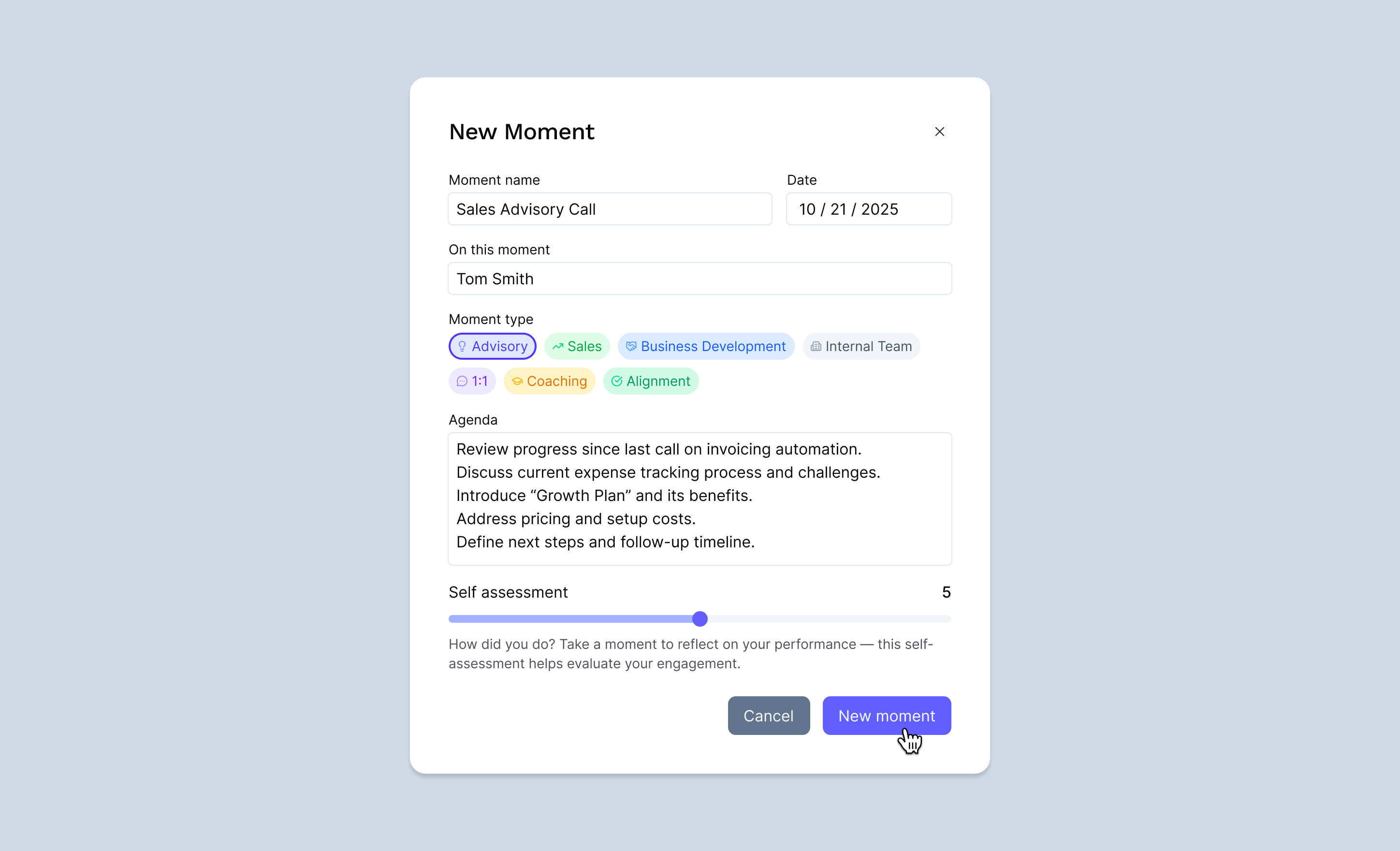
One specific friction point: the flow required a manual self-assessment score before AI grading could run, meant to encourage reflection, but it interrupted momentum right when a user wanted to move fast. The fix was making it optional but encouraged, guidance instead of a gate.
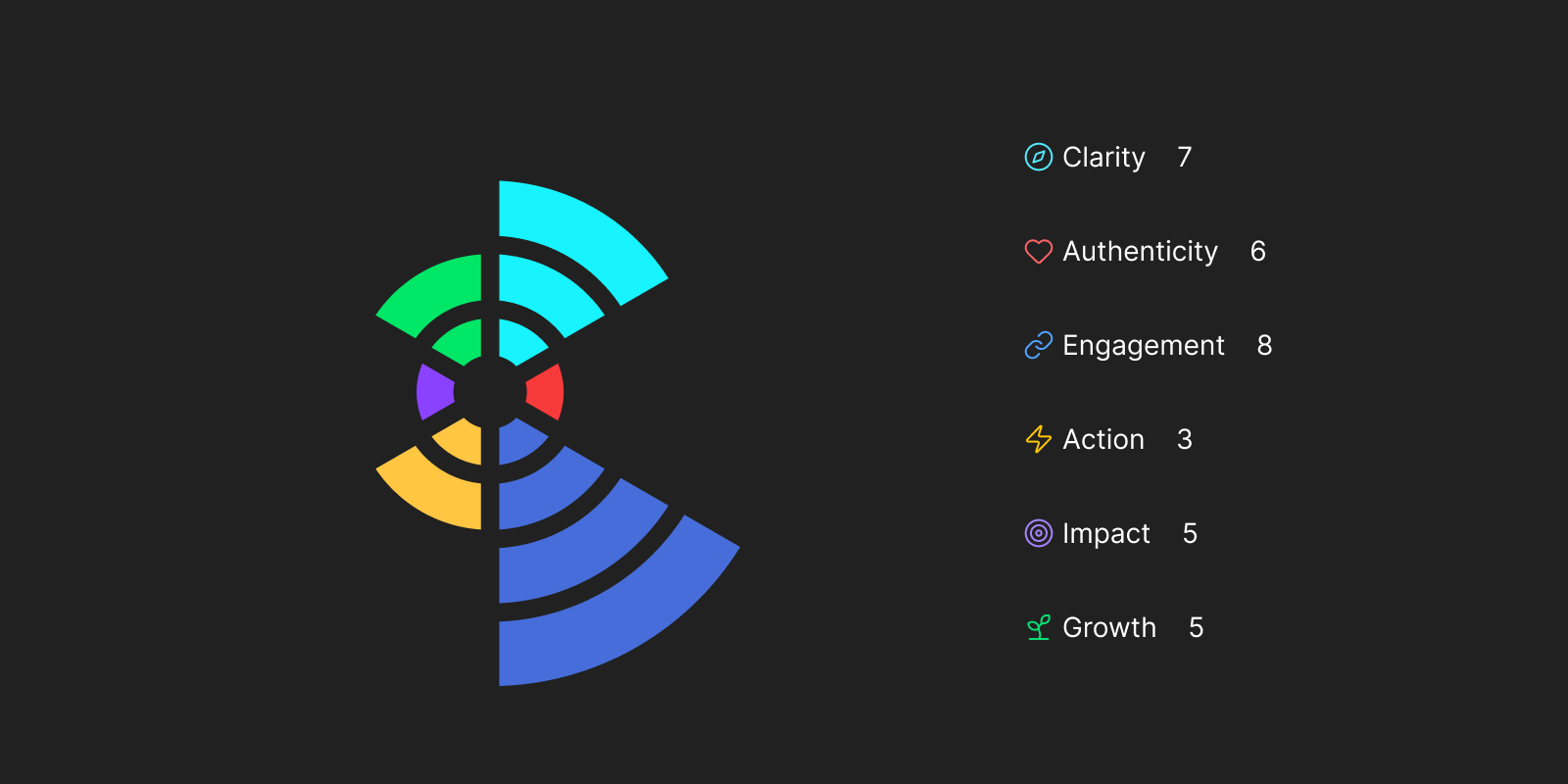
The six scoring criteria, clarity, authenticity, engagement, action, impact, and growth, needed a way to show relative strengths and weaknesses at a glance rather than a single number, which shaped the radar visualization used throughout the product.
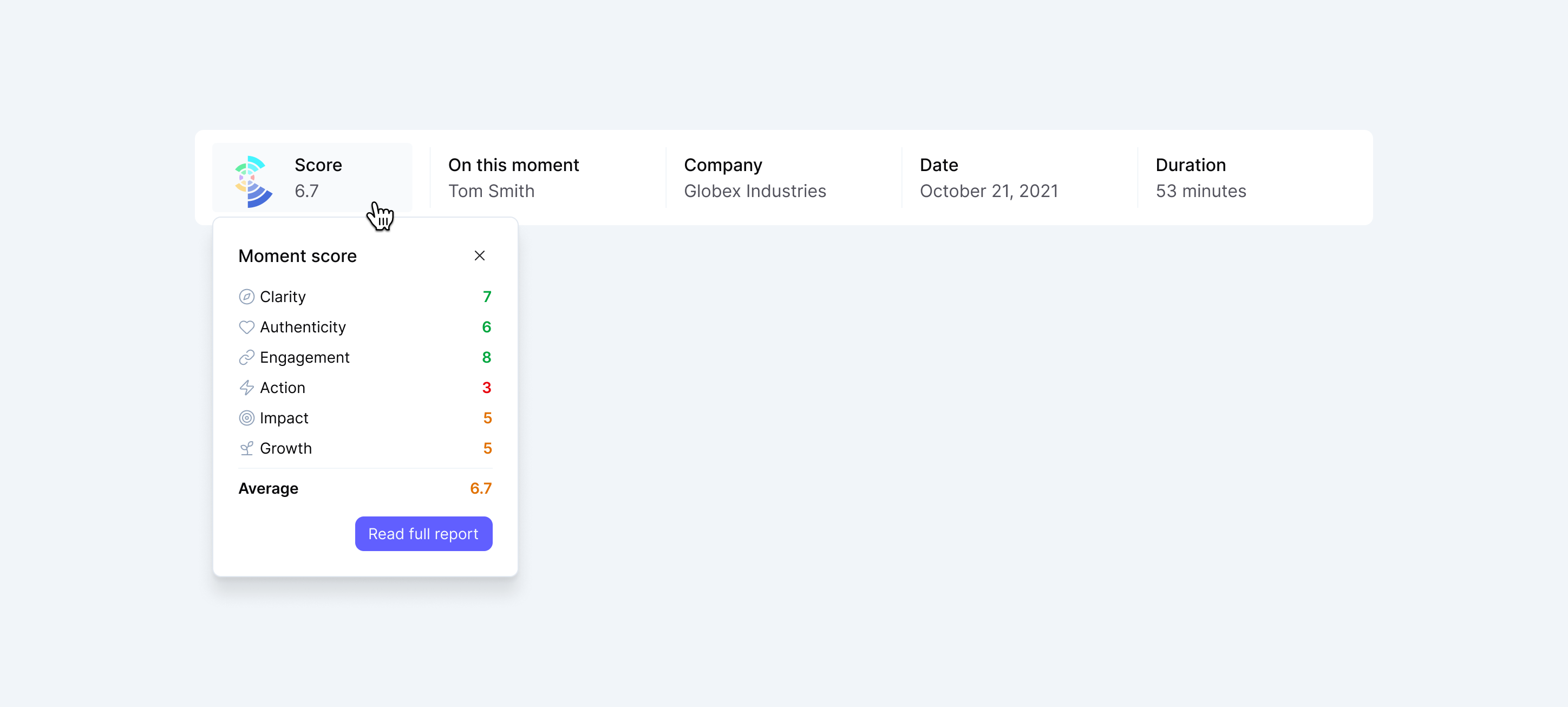
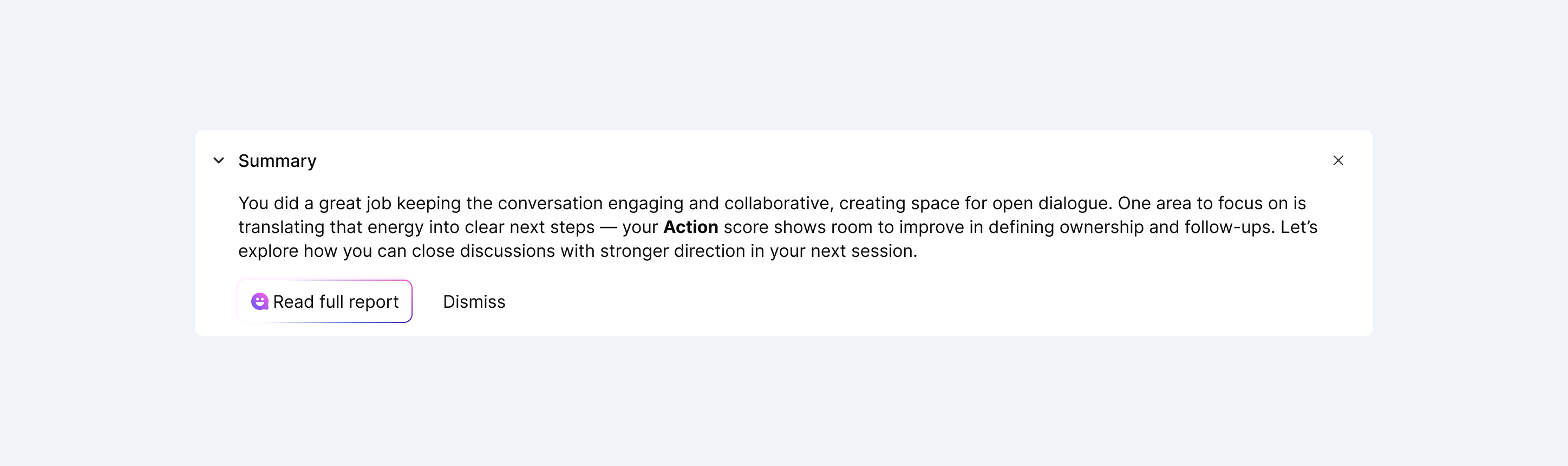
Recommendations focused on streamlining forms, clarifying calls to action, improving validation patterns, and creating a more intuitive flow from transcript upload to AI-generated coaching insights.
Every interaction was evaluated through the lens of reducing cognitive load and helping users maintain momentum.
Creating Clearer Guidance & Motivation
A recurring theme throughout the audit was the need for stronger guidance and clearer communication.
Empty states, onboarding experiences, contextual help, and progress indicators all presented opportunities to better support users throughout their coaching journey.
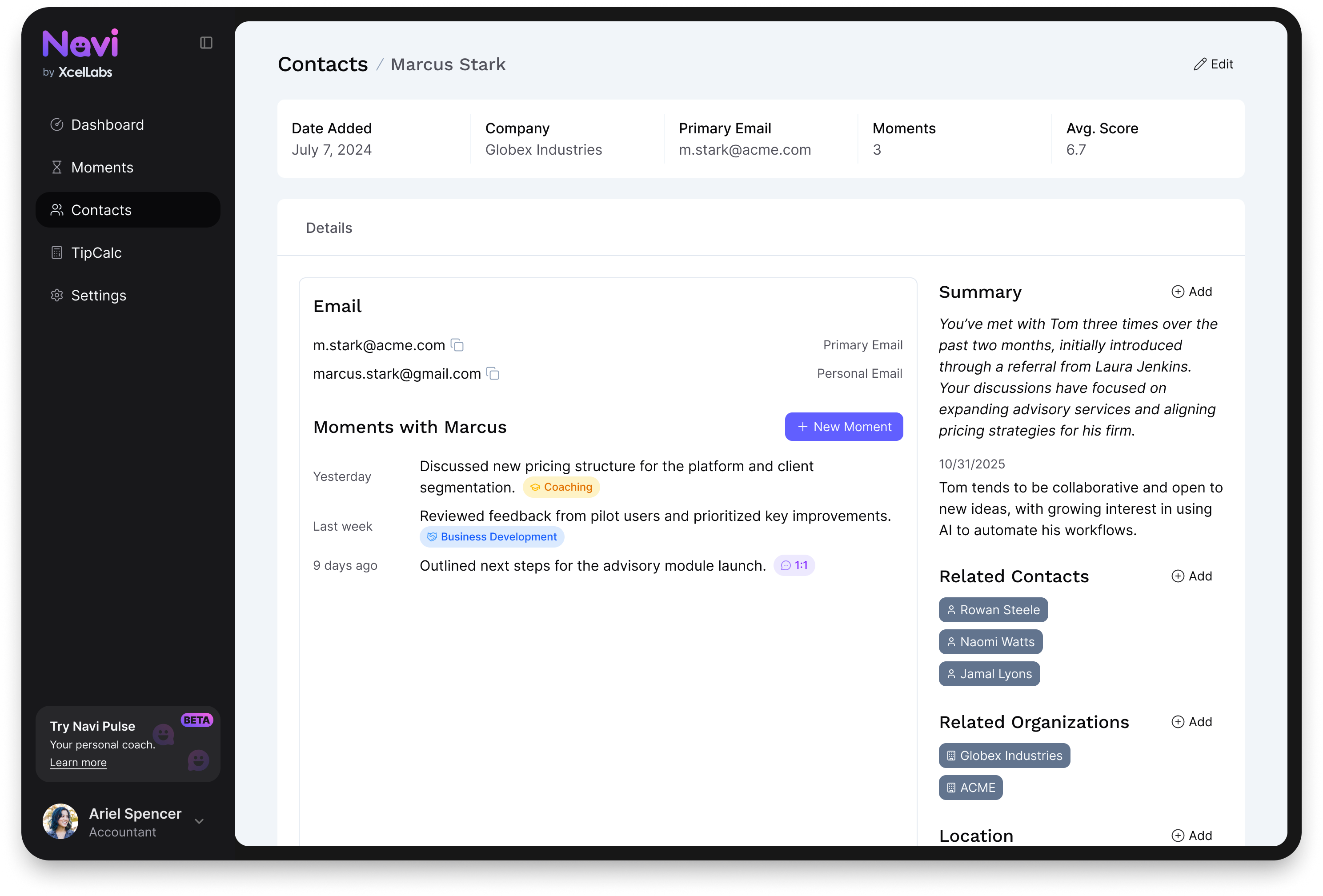
The proposed direction emphasized helping users understand where they are, what they should do next, and how their actions contribute to long-term improvement.
From reports to a proactive agent: Ask Navi
The clearest shift in the whole engagement was architectural: instead of scoring and reports sitting at the center of the product, a persistent AI chat, Ask Navi, became the hub, with scoring as a supporting layer underneath it.
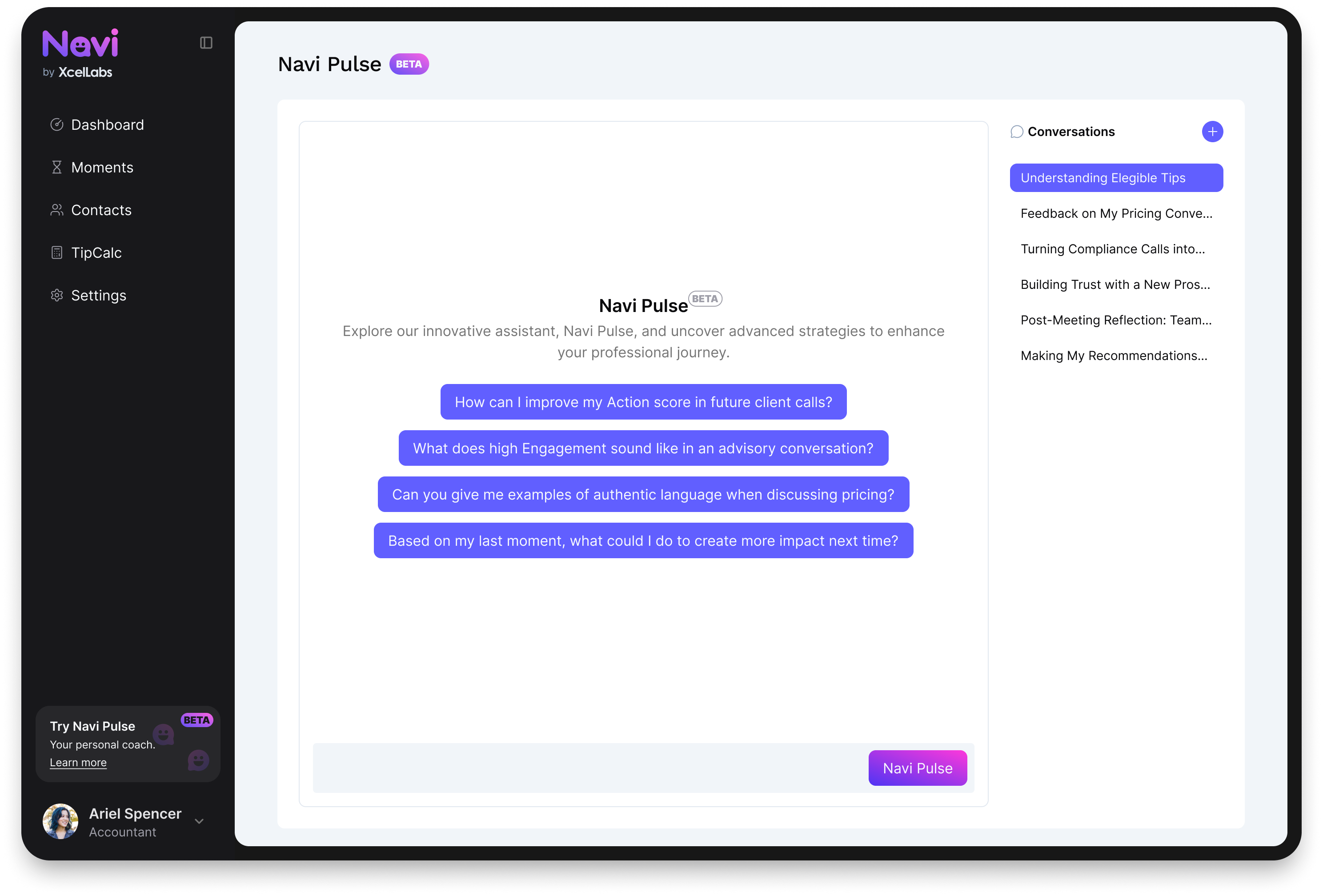
Ask Navi surfaces its own starting points, prompts like “how can I improve my action score in future client calls?”, so the agent isn’t waiting passively for a question, it’s proactively pointing users toward their next useful conversation.
Presenting that direction live was one of the clearest moments of the engagement: the reaction was immediate, the concept was exactly the ideal the team had been trying to articulate, and the chat-first direction and the “Ask Navi” naming were adopted in that same session.
”Provide timely, proactive guidance, not just post-session analysis.”
That line, from the original audit, became the throughline for the whole redesign: an AI coach that acts more like an active participant in someone’s growth than a report generated after the fact.